Loading
Multi-storey modular
Multi-storey modular construction.
Most modular ceilings out at 2–3 storeys because the chassis won't hold. CoGrid's chassis is engineered, structurally tested, and patent-protected for full multi-storey loadings.
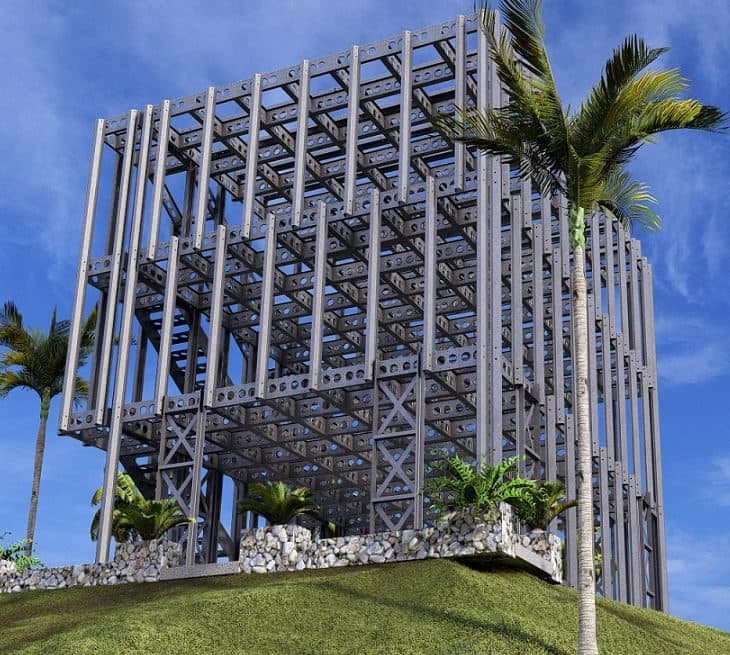
The growth segment in modular construction worldwide is multi-storey: 4+ storey apartment buildings, hotel and accommodation builds, student housing. The structural performance ceiling on conventional modular has held the segment back — most modular suppliers can't reliably deliver above 3 storeys without hybrid construction.
CoGrid was engineered with multi-storey loadings in mind from the start. The chassis has been independently load-tested by structural engineers and validated against cyclonic loading and full multi-storey static and dynamic loadings. The first prototype build was a full two-storey house; the system is engineered to scale higher.
For developers and modular builders looking to break through the 3-storey ceiling, CoGrid is the chassis that gets you there.
- Engineered for multi-storey static and dynamic loadings
- Independent structural validation
- Patent-protected component design
- Same chassis from single-storey through 4+ storey
- Compatible with lift cores, common areas, and balconies
Frequently asked
Common questions about multi-storey modular.
How tall can a CoGrid building go?
The chassis is engineered for multi-storey loadings. Site-specific engineering review is required for tall buildings, but the chassis has been validated against the loadings typical of 4+ storey apartment buildings.
Can it integrate with conventional construction (e.g. concrete cores)?
Yes. CoGrid is the structural shell; integration with lift cores, stair cores, and other building systems follows standard structural engineering coordination.
Related sectors
See how this fits across CoGrid's sector configurations.
Commercial
Offices, retail, mixed-use — built on a faster structural programme.
Education
Schools, training facilities, student accommodation — on programme.
Healthcare
Clinics, regional hospitals, aged care — built where they're needed.
Multi-Residential & Apartments
Townhomes, terraces, and multi-storey apartments on one chassis.
Multi-storey modular
Stress-test your multi-storey programme
Send us a typical floor plate and storey count. We'll model what CoGrid does to the structural critical path.