Loading
Prefab construction
Prefab construction, without the freight ceiling.
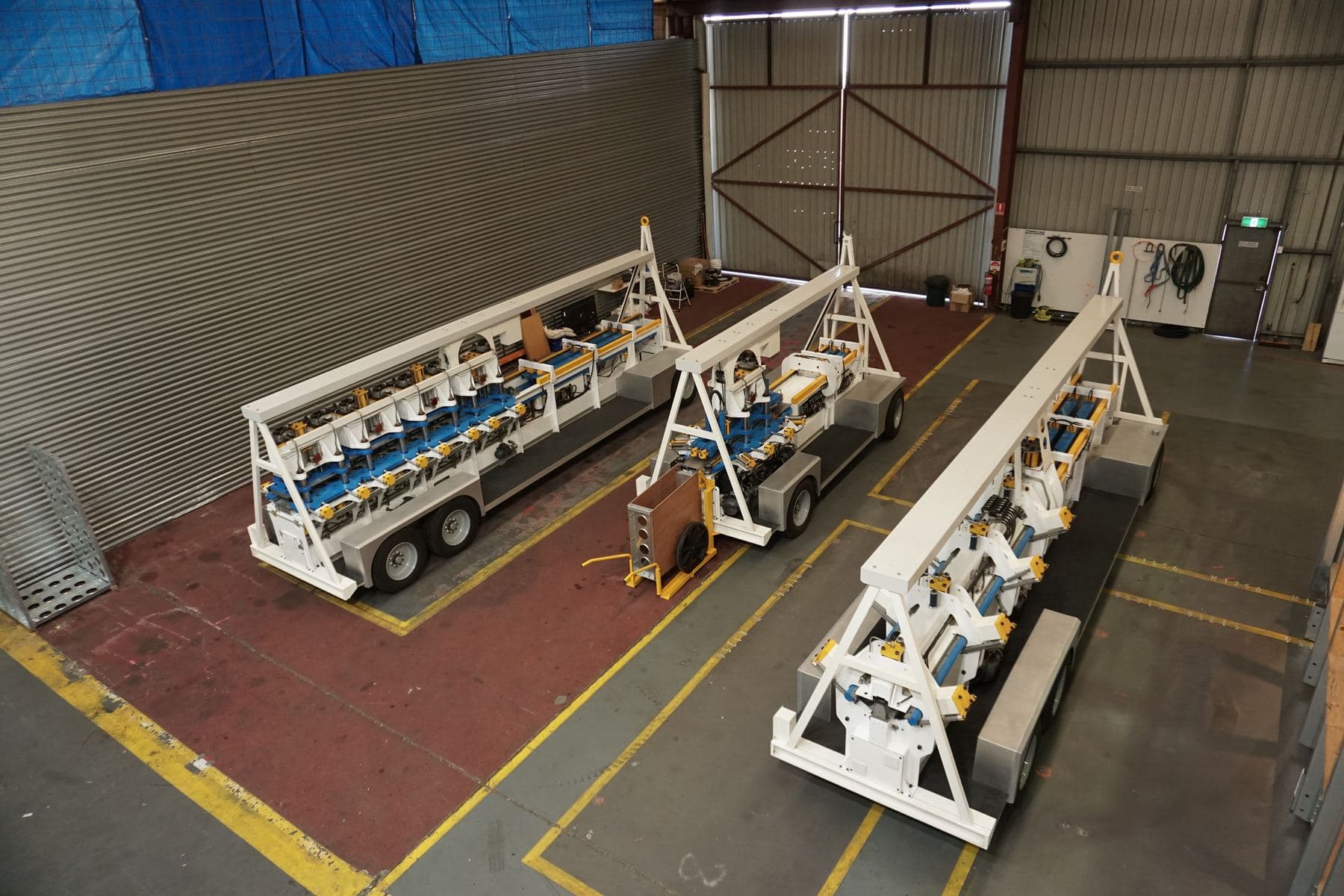
Traditional prefab moves heavy finished components from a factory. CoGrid moves the factory — three steel components formed in-region from galvanised sheet, freight-friendly, and bolted together by the build crew already on site.
Prefab construction is one of the fastest-growing segments in Australian housing. The Australia Prefabricated Construction Market is projected to grow from USD 9 billion in 2026 to USD 13 billion by 2031, driven by housing supply pressure, skilled-trade shortages, and tighter building energy codes.
The catch with traditional prefab is the freight ceiling. Finished prefab components — wall panels, room modules, sometimes whole pods — have to ship as oversized loads, with route permits, escort vehicles, and freight bills that scale with build complexity.
CoGrid fixes that by moving the factory itself. The forming machines fit in a 20ft shipping container, draw under 7 kW intermittently, and produce columns, beams, and spreaders from galvanised steel sheet — a stock material available in nearly every market. The components are flat-pack and freight cleanly on standard trucks. No oversized loads. No supplier dependency.
For prefab builders, that's the same promise — programme compression, design certainty, repeatability — without the freight bill that limits where prefab can actually go.
- Mobile production — forming unit fits in a 20ft container
- No oversized loads — components flat-pack on standard freight
- Single feedstock — galvanised steel sheet available globally
- Same parts across residential, commercial, and institutional builds
- Engineered to Australian standards with patent-protected components
Frequently asked
Common questions about prefab construction.
How is CoGrid different from traditional prefab?
Traditional prefab ships finished components from a factory. CoGrid ships the factory itself — and produces components on or near site. You stop paying for finished-component freight, and you stop being locked into one supplier's lead time.
Where can CoGrid prefab go?
Anywhere galvanised steel sheet is available — which is most of the world. The mobile forming unit and bolted assembly remove the constraints (cranes, oversized loads, prefab supplier dependency) that limit where conventional prefab can be deployed.
What's the cost saving vs conventional prefab?
Up to 40% lower structural cost vs. conventional construction, with similar advantages over heavy finished-component prefab once freight, lead time, and crane bookings are included in the comparison.
Related sectors
See how this fits across CoGrid's sector configurations.
Commercial
Offices, retail, mixed-use — built on a faster structural programme.
Industrial & Warehouse
Warehouses, workshops, and light-industrial builds at programme tempo.
Multi-Residential & Apartments
Townhomes, terraces, and multi-storey apartments on one chassis.
Residential
Single-family homes built faster, with fewer trades, at lower cost.
Prefab construction
Talk to us about prefab
If you're scoping a prefab programme, we'll model what CoGrid does to your structural critical path.